Many years ago, my American puzzle started out as a six-piece puzzle with large wooden pieces– a toddler puzzle. The pieces were The Colonies, the Revolution, the Civil War, World War I, World War II and the Cold War. Eventually there was a seventh piece– 9/11. Fairly straightforward. Pretty memorable. Not bad for a child.
As time goes by, the puzzle becomes more intricate. Pieces are shuffled around. They seemed to fit one place, but then, upon closer inspection, the picture is more vibrant and clear when placed in a different section of the puzzle. More pieces are added. Context grows. The puzzle will never be done – the puzzle of history.
Unfortunately, we sometimes stop playing with puzzles. We lose patience. We don’t move up to the next level. The simplistic puzzle is conflict-centric. It includes the Revolutionary War, but the pivotal debates and struggles of the Confederation Period are absent. It includes the Civil War, but the dueling ideologies during Reconstruction are overlooked. Like milk, the easy puzzle nourishes a child’s mental capacities. At some point, however, one must develop a more mature appetite for history that encompasses not just a generalization of the primary food groups, but the vitamins, minerals, micro-nutrients, and living bacteria that explicate movements and moments, people and positions.
What a beautiful privilege it has been to live in Washington, DC for two years. We don’t take it for granted. In each of the last two school years we have homeschooled one of our children and completed a U.S. History intensive. We do at least one field trip a week. Even that is not enough to plumb the depths of the resources and material available and all that’s accessible to those with eyes that read and ears that listen. It’s all relevant.
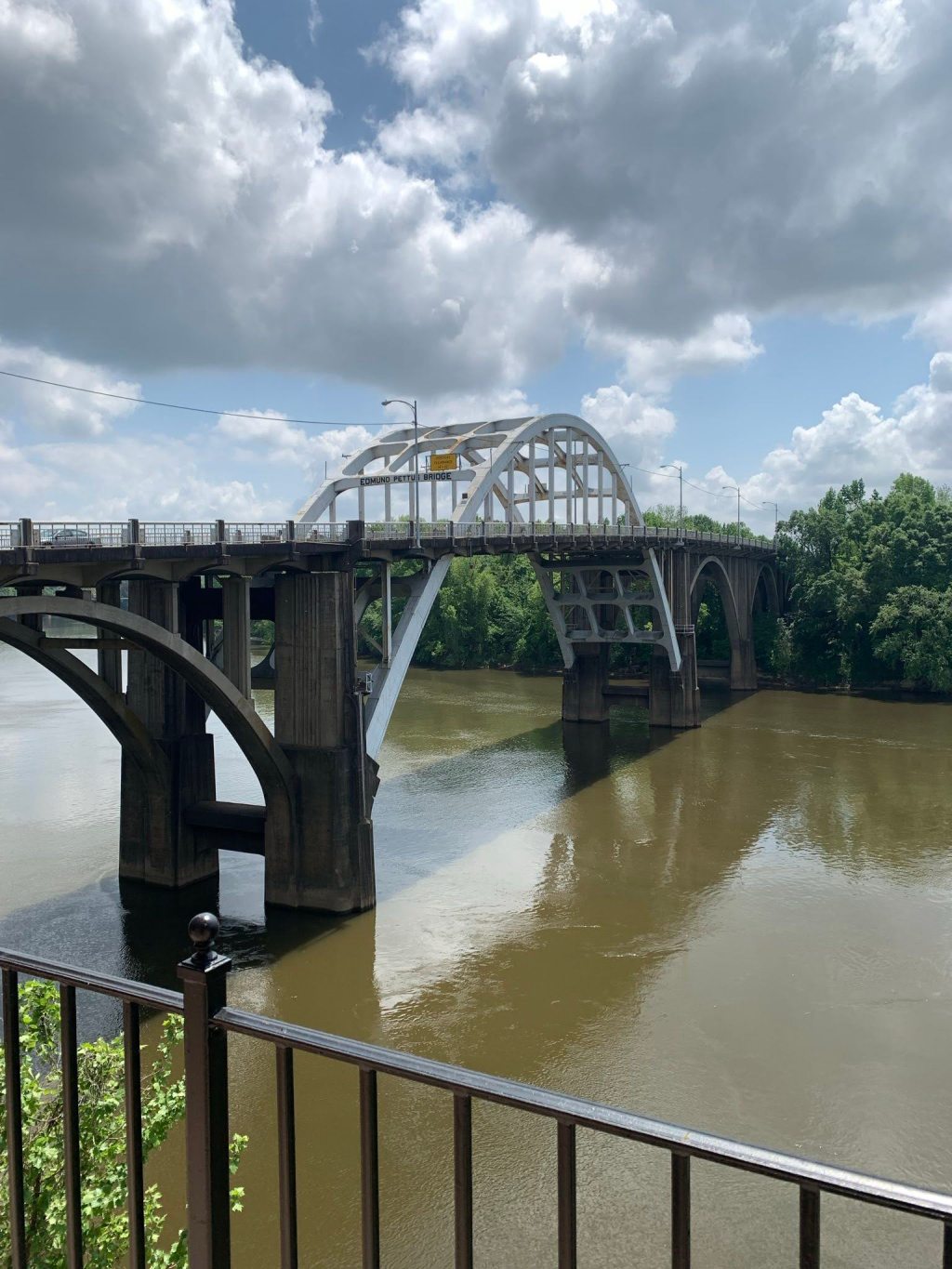
For spring break we went further afield and weren’t moved by grand monuments or world class museums, but the deliberate strides of the foot soldiers, the everyday folks who walked across the Edmund Pettus Bridge in Selma, Alabama in 1965.
It’s been said history is in biography. This history is often biography of the famous dead — LBJ, JFK, MLK. When we’re fortunate, however, it’s biography of the not-famous living.
Sam Walker was eleven at the time. We know this because he told us. But not right away.
He sat genially behind the reception desk at the National Voting Rights Museum and Institute in Selma, Alabama when our family walked in. There were no other visitors, so we were not surprised that he passed his time chatting with a friend on the phone. He said a quick goodbye and gave us his full attention, starting with the admission fee.
He stood up behind the desk. We signed the guest book and then he gave us his short explanation of the museum. He was going to send us on our way through the exhibits when, unaware of his personal history, I asked “Were you there?” His demeanor changed. His countenance shifted.
“Yes.”
“Would you mind sharing your story with us?”
He stepped out from behind the desk. We gathered in. He could tell we were people who wanted to know. We were a folk who wanted to listen. Mr. Walker recounted his experience of running to school to be marked “present”, then running to the courthouse protest to be present. He gestured to exhibits and told of his activities. Like all those who stepped foot on the bridge, they had to attend a full-day session on non-violent protest. Anyone who did not go through the training was not allowed to participate. And when the week-long march to Montgomery finally happened, he supported by working in the field kitchen at the overnight camping spots. His story was retold in 2015 for Newsweek.
This is the testimony of living history. We can talk to someone who remembers, who was present, who was there. In decades to come our grandchildren will ask about these events and we can say “No, I wasn’t born yet, but when I was younger people were still alive that lived through it and I met them and they told me their story.”
When I was born, there were people alive who heard stories firsthand from Civil War veterans. My children can still hear stories first hand from World War II veterans. When they are old and World War II is nearly 150 years in the past, they can say they heard stories firsthand from those who lived through it.
History is not far off. It is near, in our stories, in our memories, and in our lived experience. A personal account is another piece to the puzzle. I’m grateful for Mr. Walker’s willingness to share his story. That little piece of the puzzle is dearly significant.

 will travel with kids